Early Sauk Centre
A glimpse into Sauk Centre's pioneer heritage.
To learn more about the Sauk Centre area visit the History Museum and Research Center.
To learn more about the Sauk Centre area visit the History Museum and Research Center.
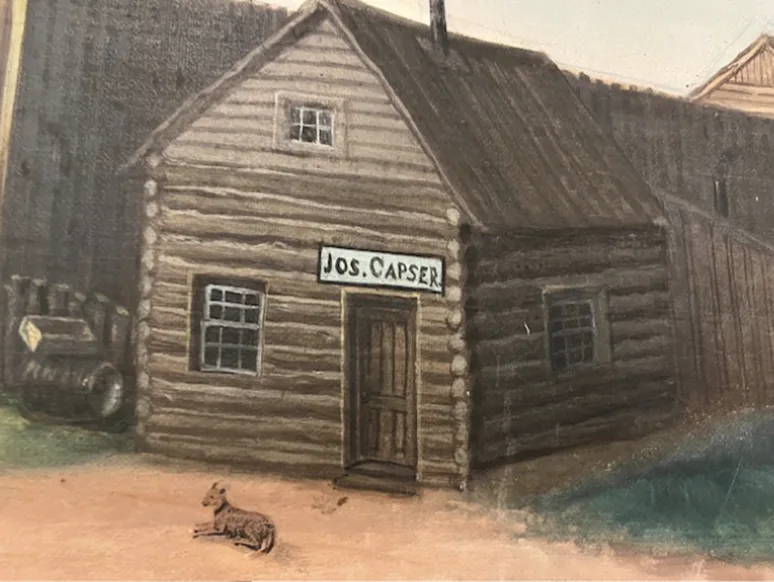
Capser Store, 1864
One of the earliest businesses in Sauk Centre was established by Joseph & Marianna Ley Capser. He immigrated from Bavaria, and she was born in St. Joseph, Minnesota. After their marriage they moved to Sauk Centre and were the proprietors of a small log store which stood just adjacent to the stockade.
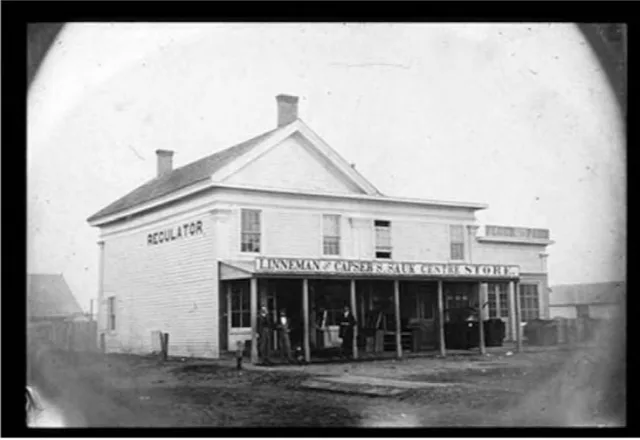
Capser's General Store
The Capser’s second store was purchased from Alexander Moore, the founder of Sauk Centre. Joseph Capser then formed a partnership with J.H. Linneman of St. Joseph, calling the new business Linnenman & Capser’s Sauk Centre Store which stood on the northeast corner of Main and Third Street. It featured a saloon and a cracker barrel which drew business from farmers, travelers and teamsters alike. [Picture taken 1879.]
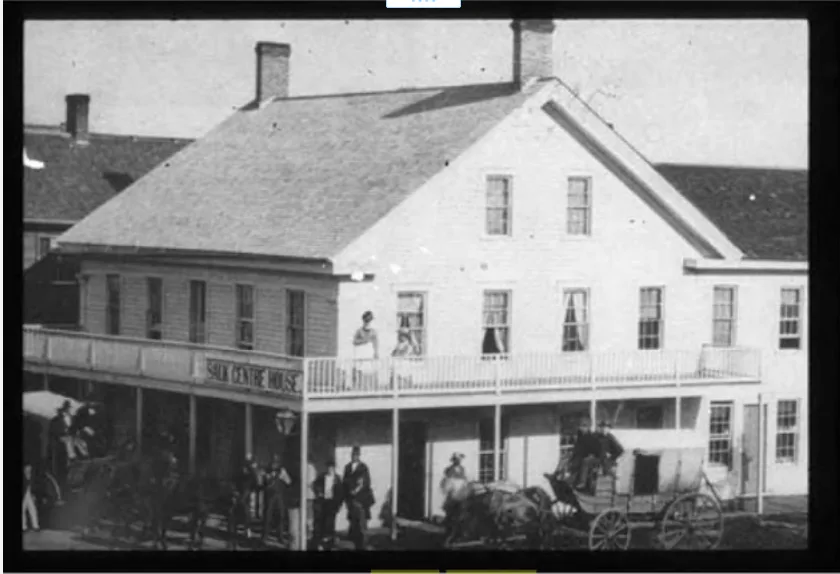
Sauk Centre House, 1863
Built in 1863 by Warren Adley on the corner of Main Street and Third Avenue, it was the first hotel in Sauk Centre. It served as a stage office and gathering place for a variety of events from formal dinners, marriages, business meetings to a watering hole for professional gamblers. It also has a history as a brothel.
Prior to the first train arriving in Sauk Centre in 1872, the Sauk Centre House was a stopping place for stagecoaches and wagon teams carrying goods and people.
On June 26, 1900, the Sauk Centre House, which was constructed with wood, burned to the ground. Almost immediately the mayor called a meeting to form a committee to rebuild the hotel.
Prior to the first train arriving in Sauk Centre in 1872, the Sauk Centre House was a stopping place for stagecoaches and wagon teams carrying goods and people.
On June 26, 1900, the Sauk Centre House, which was constructed with wood, burned to the ground. Almost immediately the mayor called a meeting to form a committee to rebuild the hotel.
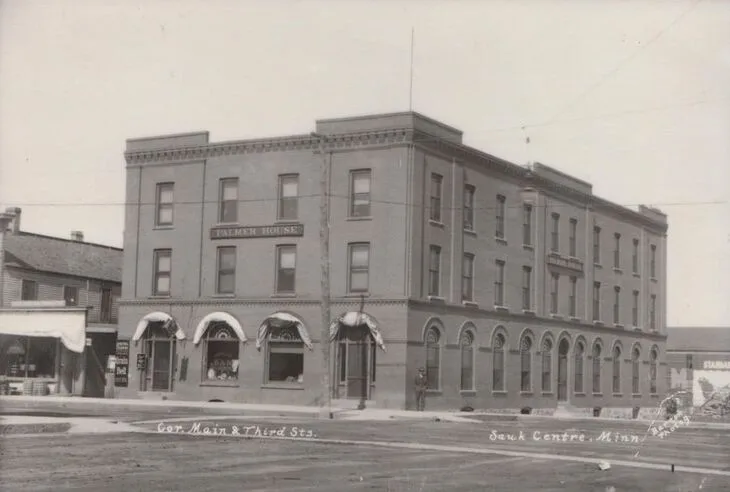
Palmer House, 1901
On the same site Richard L. Palmer built a new three-story hotel of brick known as the Palmer House. It was the first building with electricity in the town. Sinclair Lewis worked as the night clerk in 1902, which was the same year he graduated high school. He was fired for failing to awaken a salesman to meet an early train.
Many believe that the ghosts of the people who once lived or worked in the Sauk Centre House haunt the Palmer House today.
Many believe that the ghosts of the people who once lived or worked in the Sauk Centre House haunt the Palmer House today.
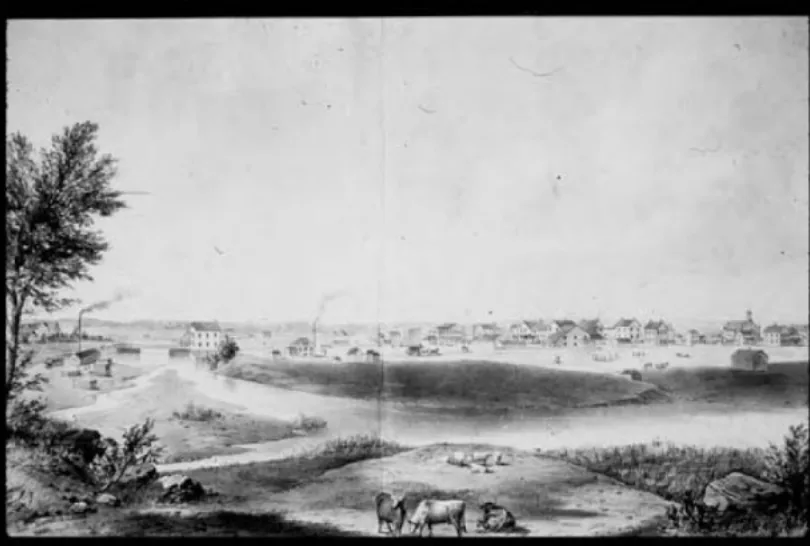
Sauk Centre, 1868
A View of Sauk Centre by artist Wilfred Whitefield
“We stood upon an elevated ridge and looked down upon a level prairie and the sylvan Sauk, with a dense forest in the background of the other side. Before us lay the townsite of Sauk Centre."
“A Trip to Sauk Valley in 1858.” Sauk Centre Herald, April 9, 1868
Wilfred J. Whitefield’s lithograph speaks to that description, emphasizing the natural setting of Sauk Centre. In the foreground animals are seen grazing, the Sauk River meanders through the middle, while a church, the mill and dam along with several smokestacks are clearly recognizable demonstrating the viability of this young settlement.
Whitefield in advertising his lithograph said, “This picture will be highly prized in the future when our town shall have increased to eight to ten thousand inhabitants”.
[Sauk Centre’s current population is 4,554].
“We stood upon an elevated ridge and looked down upon a level prairie and the sylvan Sauk, with a dense forest in the background of the other side. Before us lay the townsite of Sauk Centre."
“A Trip to Sauk Valley in 1858.” Sauk Centre Herald, April 9, 1868
Wilfred J. Whitefield’s lithograph speaks to that description, emphasizing the natural setting of Sauk Centre. In the foreground animals are seen grazing, the Sauk River meanders through the middle, while a church, the mill and dam along with several smokestacks are clearly recognizable demonstrating the viability of this young settlement.
Whitefield in advertising his lithograph said, “This picture will be highly prized in the future when our town shall have increased to eight to ten thousand inhabitants”.
[Sauk Centre’s current population is 4,554].
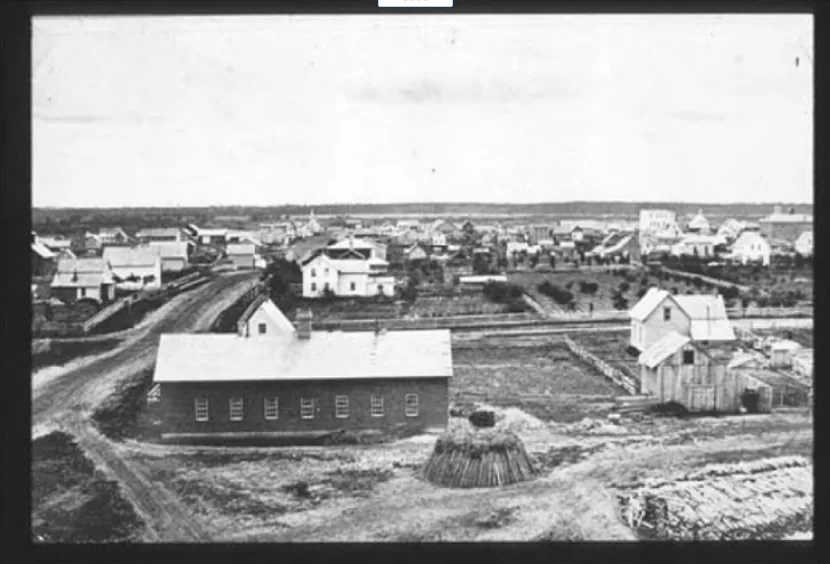
Sauk Centre, 1877
An 1877 photograph of Sauk Centre shows a different perspective from Wilfred J. Whitefield’s 1868 Lithograph.
Third Street is seen on the left leading to downtown Sauk Centre.
The town showcases the presence of classically inspired L-shaped houses.
Third Street is seen on the left leading to downtown Sauk Centre.
The town showcases the presence of classically inspired L-shaped houses.
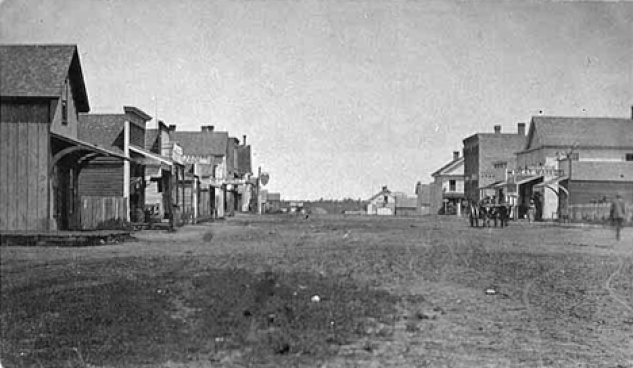
Main Street, 1877
The raw frontier of Main Street in 1877 looking north from 4th Street.
The buildings on the left are false fronts, a representation of the earliest type of architecture in the west and middle west. These obscure false fronts are thought to have originated from the California mining towns after the 1849 Gold Rush.
The buildings on the left are false fronts, a representation of the earliest type of architecture in the west and middle west. These obscure false fronts are thought to have originated from the California mining towns after the 1849 Gold Rush.
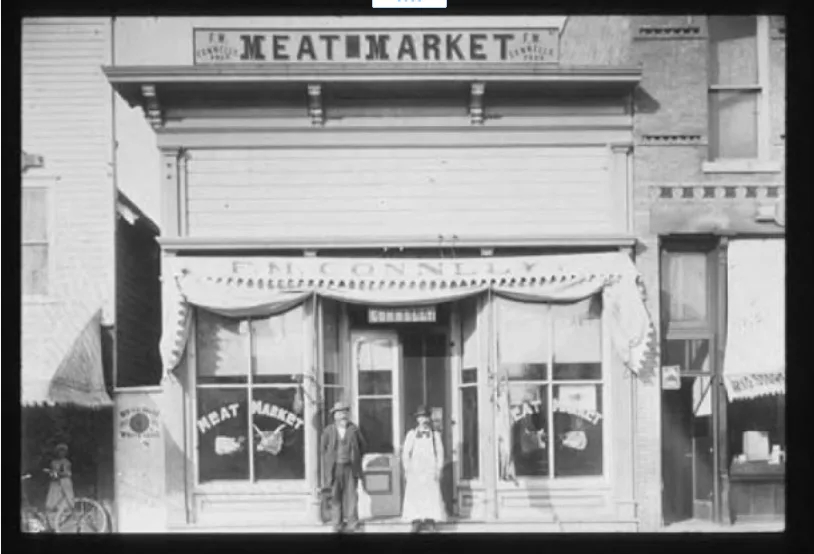
Connlly Market
This building had an exceptionally designed front compared to the false fronts that brought unevenness, plainness due to each owners own style of building.
Pendergast Block, 1877
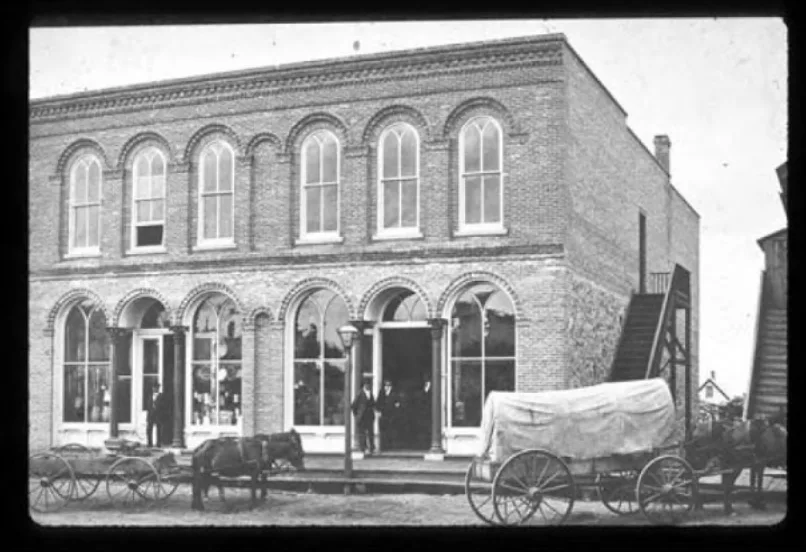
The southeast corner of Main and Third stands what was once the Pendergast and Fish General Store. Their first store had been within the stockade.
George Lucas Photography, 1878
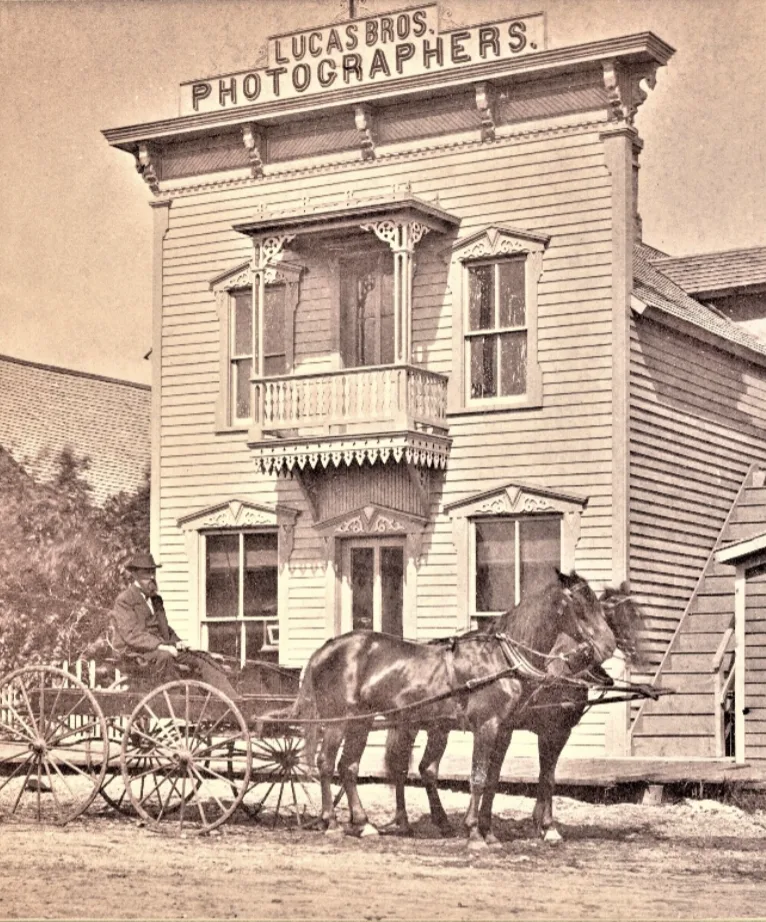
Photographer George Lucas came to Sauk Centre in 1877 and is responsible for many of the early photos of the town, thereby offering visual documentation of its earliest buildings and events. Originally from Rockford, Minnesota George and his brother Willard Lucas built and operated their studio on the east side on Main Street adjoining the Bruce Block.
The man in the buggy is believed to be George Lucas.
The man in the buggy is believed to be George Lucas.
A Walk to Remember
The complete video is available at the museum for purchase.